
Unpleasant odour
Odour may come from contamination, moisture or drainage; the particular source should be assessed.
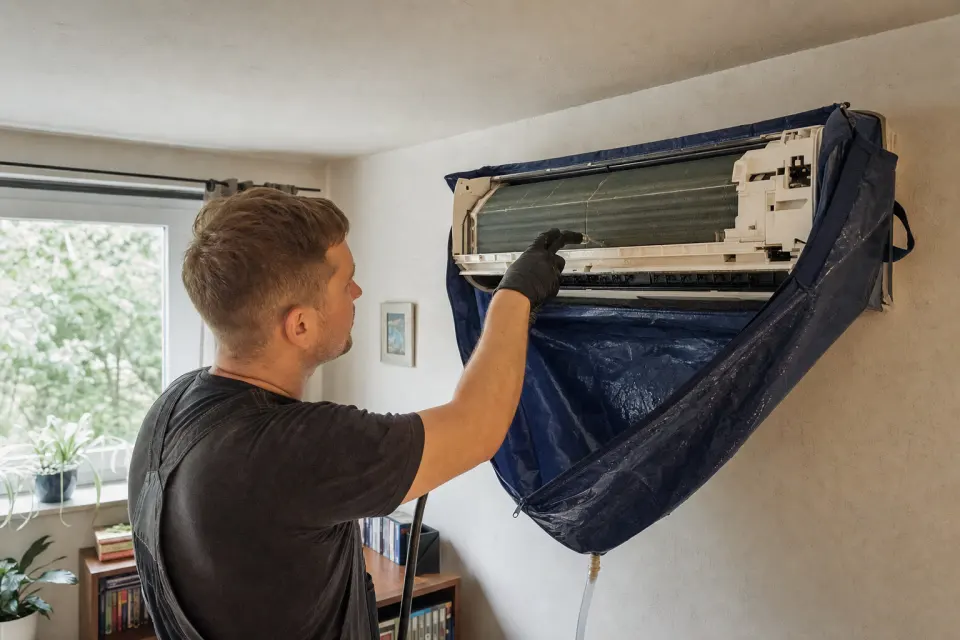
Clean, unrestricted airflow
Dust and moisture on filters and indoor-unit surfaces can restrict airflow and contribute to odours. We clean stationary air-conditioning systems according to their construction, accessibility and the level of contamination found.
A considered solution
Filters are the most accessible part, but contamination can also collect on the heat exchanger, fan and drainage system. We define the work from the actual condition of the equipment.
What we assess
Important before work
The exact scope depends on the property, equipment and installation conditions.
Odour may come from contamination, moisture or drainage; the particular source should be assessed.
Blocked filters and dirty surfaces can restrict airflow, although technical faults can produce similar symptoms.
Unsuitable chemicals and uncontrolled water near electronics can damage the equipment.
Sources of contamination
An air conditioner circulates room air, so filters and internal surfaces gradually collect dust and other particles. Nearby cooking, pets, high occupancy and long operating hours can increase how often cleaning is required.
Moisture forms inside the unit during cooling. If contamination remains damp, an unpleasant odour can develop. The source still needs assessment because drainage or conditions elsewhere in the room can also be responsible.
Cleaning scope
Filter cleaning is routine care provided for users by many manufacturers, but it may not be sufficient. Contamination on the heat exchanger or fan can continue to restrict airflow and retain odour after filters have been washed.
Professional cleaning reflects the system’s construction and access. We protect nearby surfaces and electronics, use a method appropriate to the component and check that the unit is correctly reassembled and operating afterwards.
Maintenance or repair
A unit that does not start, shows an error, makes a mechanical noise or fails to cool with clean filters needs diagnostics. Cleaning cannot replace repair of a failed component or assessment of the refrigerant circuit.
Water leakage also has several possible causes: contamination, an unsuitable fall, a failed connection or another fault. Technical problems found during cleaning are explained and any repair is agreed separately.
Safe everyday care
Follow the manual for the particular model and inspect only filters intended for user access. Switch the equipment off before removing them and allow components to dry fully after washing where the manufacturer requires it.
Do not apply random disinfectants, pressure water or sharp tools inside the unit. Incorrect cleaning near electronics or the fan can cause damage. Arrange professional service where dismantling or deeper access is required.
A clean work process
Before deeper cleaning, we assess access and nearby finishes. The work area is protected from dirt and moisture, particularly above furniture, timber surfaces or electronics. The method must suit the model so controls and moving parts are not damaged.
After reassembly, we check the fan, airflow and accessible condensate drainage. If odour, noise or cooling problems remain, the source may lie outside the completed cleaning scope and we explain what further diagnostics would be appropriate.
Preserving the result
Observe airflow, odour and drainage over several operating cycles. If an odour or leak quickly returns, deeper contamination, concealed drainage or another moisture source may be present. Reassessment is more useful than repeatedly washing only the filters.
Adapt user filter checks to the room. Kitchens, pets, construction dust and high footfall can require more frequent care. Always follow the model-specific manual because filter construction, removal and washing instructions differ.
Record the professional cleaning date and completed work. For business equipment, a simple service log helps plan the next inspection and distinguish gradual contamination from a sudden technical fault.
Work process
Before starting, we confirm the solution, cost and suitable timing.
Describe odour, airflow changes and any other symptoms you have noticed.
We inspect accessible components and determine the cleaning scope.
After the agreed work, we verify operation and explain any separate technical risk.
Frequently asked questions
If your circumstances differ, describe them in the request and we will clarify the information needed.
Not always. Drainage faults, moisture in surrounding construction or another technical issue may require additional work.
User-accessible filters may be maintained exactly as described in the manufacturer’s manual. Deeper dismantling and work near electronics should be left to a specialist.
Preparing your request
In your request, list the number, model and location of every unit and the date of the last service. Note which system has an odour, weak airflow, unusual noise or signs of condensate. Provide access to both indoor and outdoor units. Keep the service date and notes afterwards so future inspections can compare the equipment’s condition.
Next step
Choose a service and provide the essential information. We contact you before work to confirm the details and proposal.