
Intensity of use
Equipment used daily in an office may need attention more often than a domestic system used only in summer.
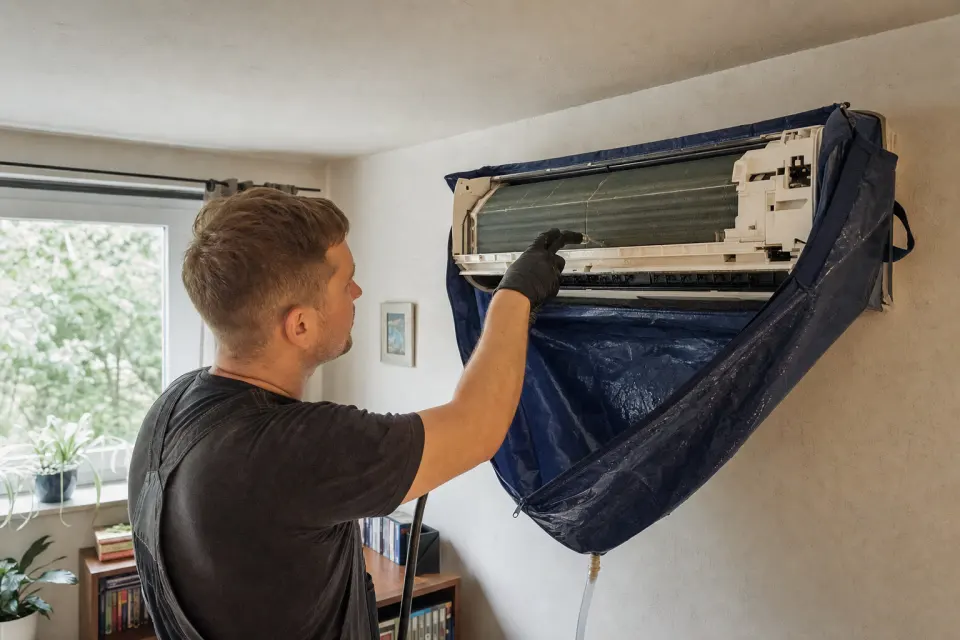
Planned system care
Air-conditioner maintenance helps preserve airflow, cleanliness and predictable operation. We adapt the work to the equipment type, intensity of use, access and the condition found during inspection.
A considered solution
Weaker airflow, an unpleasant odour, increasing noise, visible contamination or a long period without professional inspection can all indicate that maintenance is due.
What we assess
Important before work
The exact scope depends on the property, equipment and installation conditions.
Equipment used daily in an office may need attention more often than a domestic system used only in summer.
Dust, pets, cooking and the surrounding environment affect how quickly filters and surfaces become contaminated.
Maintenance can reveal changes in drainage, airflow or operation before the busiest cooling period.
Maintenance scope
User-accessible filters capture some dust, but contamination can also collect on the evaporator, fan, condensate tray and drainage system. A broader service evaluates airflow, the cleanliness of accessible components and operation in cooling mode.
The scope depends on the model, construction and actual condition. Some systems need wider access to internal components, while others require focused cleaning and a drain check. We adapt the work instead of applying one identical procedure to every unit.
Maintenance frequency
A domestic unit used only during the hottest weeks differs from equipment operating for long hours in an office, shop or technical room. Dust, pets, nearby cooking and heavy occupancy can accelerate contamination of filters and internal surfaces.
No single interval is ideal for every property. We consider manufacturer guidance, actual use and signs such as weaker airflow, odour, noise or visible contamination. Scheduling maintenance before the active cooling season is often practical.
Drainage and moisture
Cooling creates condensate on the indoor heat exchanger, which should leave through the drain. Contamination, an incorrect fall, a poor connection or blockage can allow water to collect and leak into the room.
Maintenance includes the accessible drainage components and visible discharge problems. Long-standing moisture damage, concealed pipes or a technical fault may require separate diagnostics and repair beyond routine maintenance.
Operating checks
Maintenance can improve airflow and resolve contamination-related problems, but it cannot repair a failed sensor, fan motor, electronic component or refrigerant-circuit fault. If operation or sound indicates a technical issue, we identify it separately.
The aim is not to promise that every problem disappears after cleaning. We distinguish routine care from repair so the completed work and any required next step remain clear.
Homes and businesses
At home, seasonal operation, quiet bedrooms and clean airflow in living areas are often the priorities. Tell us when the last service took place and about pets, renovation dust or rooms where the equipment runs longest. Outdoor units on roofs or inaccessible balconies need advance access planning.
In offices and shops, maintenance should fit working hours, customer flow and the responsible person’s availability. A clear list of room, model and observed condition makes it possible to record which unit was serviced and which needs diagnostics. This supports future scheduling based on actual load.
Maintenance result
After service, the unit should be clean within the agreed scope, reassembled and checked. We report wear, drainage risks or operating signs that cleaning cannot resolve. This does not authorise an automatic repair; additional diagnostics or parts are agreed separately.
We explain how often accessible filters should be checked and which signs should not be ignored. Maintenance timing should reflect real use because a seasonal home unit and equipment running daily in an office become contaminated at different rates.
Planning maintenance
Arrange maintenance before the period when cooling will be needed every day. List the units, their locations, the last service date and which equipment has different airflow, odour, noise or signs of condensate.
Clear the area below indoor units and provide access to outdoor units. Mention sensitive finishes, furniture and working-hour restrictions. For commercial properties, suitable timing can be agreed around the number of units and expected work.
Afterwards, continue user filter care in accordance with the manual and retain the date and technical notes. A simple history helps compare condition at the next visit and identify recurring drainage, airflow or operating changes.
Work process
Before starting, we confirm the solution, cost and suitable timing.
Tell us the number and location of units and any symptoms you have noticed.
We inspect accessible components and define the appropriate maintenance scope.
We perform the agreed tasks and explain any separate technical issue found.
Frequently asked questions
If your circumstances differ, describe them in the request and we will clarify the information needed.
The interval depends on the model, environment and intensity of use. A seasonal domestic system and equipment operating every day in a business can require different schedules.
No. Filters are one component. A broader service also considers the heat exchanger, airflow, drainage and system operation.
Maintenance is planned care of cleanliness, airflow, drainage and operation. A unit that fails to start, displays an error or has a technical defect requires diagnostics and a separately agreed repair.
Yes. List the number, type and location of all units so access, work scope and timing can be assessed in advance.
Preparing your request
In your request, list the number, model and location of every unit and the date of the last service. Note which system has an odour, weak airflow, unusual noise or signs of condensate. Provide access to both indoor and outdoor units. Keep the service date and notes afterwards so future inspections can compare the equipment’s condition.
Next step
Choose a service and provide the essential information. We contact you before work to confirm the details and proposal.