
A sealed circuit
A correctly installed system should not need regular refrigerant additions without an underlying cause.
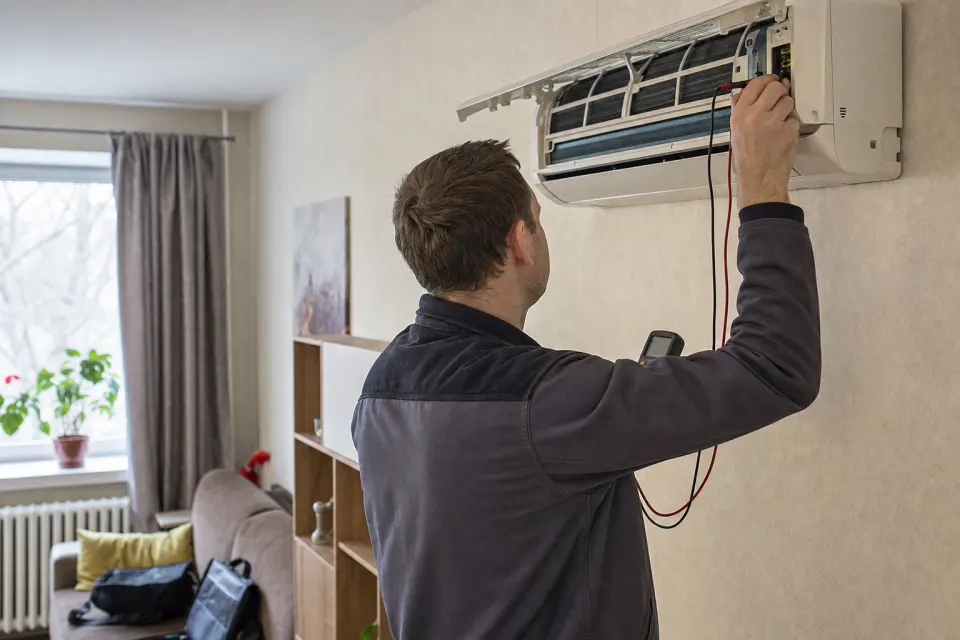
Stationary-system diagnostics
Refrigerant in a sealed split system is not routinely consumed like fuel. If the amount is insufficient, a leak, incorrect previous charge or another fault should be investigated. We diagnose stationary systems in homes, apartments and offices; vehicle air conditioning is outside our scope.
A considered solution
Weak cooling alone does not prove that refrigerant is low. Dirty heat exchangers, restricted airflow, fans, sensors, electronics, an outdoor-unit problem or insufficient capacity can create similar symptoms.
What we assess
Important before work
The exact scope depends on the property, equipment and installation conditions.
A correctly installed system should not need regular refrigerant additions without an underlying cause.
Before recharge, consider whether the system can retain the specified charge and whether repair is required.
We work on stationary building systems, not automotive air-conditioning equipment.
The role of refrigerant
Refrigerant changes state inside the system and allows heat to move from the room outdoors. It is not burned or routinely consumed during normal operation, so periodic recharge without a known reason should not be treated like filling a fuel tank.
Each model requires a specified refrigerant type and quantity. An incorrect substance or charge can impair operation and create further risk, so work must be based on equipment data, measurements and the actual technical condition.
Overlapping symptoms
Dirty filters, contaminated heat exchangers, obstructed outdoor airflow, a fan fault, sensor or electronics can all resemble insufficient refrigerant. We check the simpler and more common operating factors before working on the sealed circuit.
Incorrect capacity selection or an unusually high room heat load may also prevent comfort even when the equipment operates correctly. Diagnostics distinguish a system fault from an unsuitable application or operating conditions.
Leak diagnostics
If charge is insufficient, accessible connections, installation quality and circuit sections should be assessed. Whether a leak can be located and repaired depends on its position, equipment age and system accessibility.
Not every leak is economical to repair at any cost. We compare known work scope, parts and equipment condition so the customer can make an informed repair-or-replacement decision.
Service scope
This service applies to wall-mounted and other permanently installed air conditioners in apartments, houses, offices and commercial premises. Vehicle systems, connections and service procedures differ, and we do not provide automotive recharge.
State clearly that the equipment is stationary and include the manufacturer, complete model and a photograph of the outdoor data label. Mention previous recharge or repair work where known.
Information for diagnostics
Provide the indoor and outdoor model numbers, approximate installation year and information about previous repairs or refrigerant additions. Explain whether cooling weakened suddenly or gradually and whether ice is visible on pipes or the unit.
If a previous recharge helped only briefly, mention it. That history suggests a leak or another fault should be investigated instead of repeating the same work without a clear diagnosis.
Responsible diagnostics
We first review symptoms, airflow, accessible units and known system history. Pressure and temperature readings must be interpreted against indoor and outdoor conditions, model and operating mode. A single measurement without context is not enough for automatic recharge.
If a leak is suspected, we explain which circuit sections can be inspected and whether connections are accessible. Concealed routes or damage in an inaccessible position can change repair viability. The customer should understand the identified cause and realistic expected result.
Retain information about refrigerant used, repairs and observations. If cooling weakens again, this history supports comparison over time and helps avoid repeating work without investigating the reason. Automotive systems remain outside this service.
Work process
Before starting, we confirm the solution, cost and suitable timing.
Tell us how long cooling has been weak and whether recharge or repair was previously attempted.
We check airflow, operation and the refrigerant circuit to distinguish likely causes.
We explain whether repair, further testing or refrigerant work is appropriate.
Frequently asked questions
If your circumstances differ, describe them in the request and we will clarify the information needed.
A correctly installed sealed system has no routine recharge interval. If refrigerant is low, the possible cause should be identified.
No. This service is for stationary systems in houses, apartments, offices and commercial premises.
Preparing your request
Before diagnostics, retain the error code, complete model number and a short timeline: when the symptom began, which mode reveals it and whether the equipment has been repaired before. Do not open the casing, refrigerant circuit or electrical connections. Safe observations help us prepare, but the cause and repair scope can only be confirmed after a technical assessment.
Next step
Choose a service and provide the essential information. We contact you before work to confirm the details and proposal.