
Error code
Write down or photograph the displayed code. It can help us prepare for the diagnostic visit.
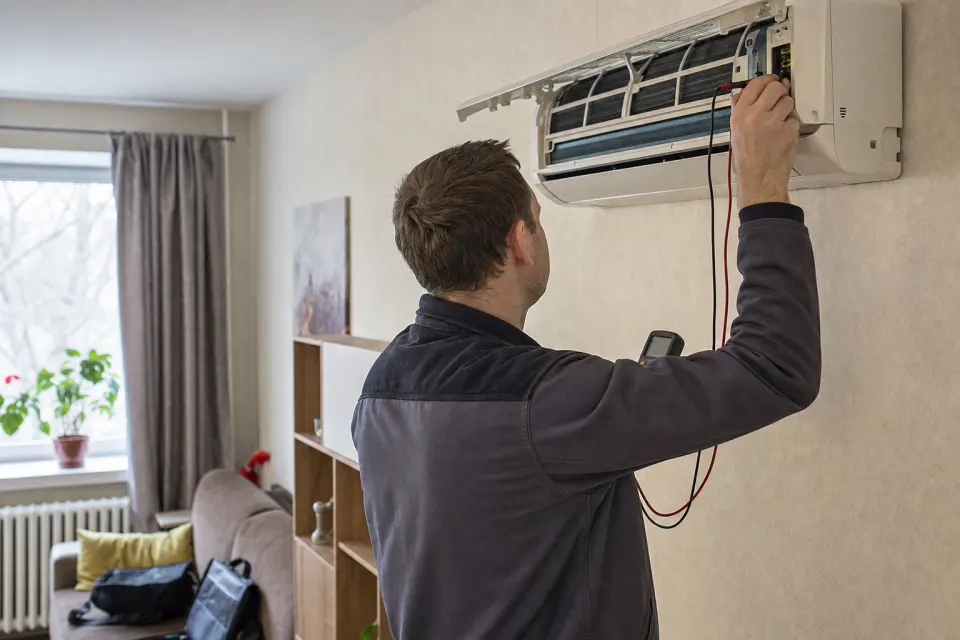
Diagnostics and repair
We diagnose and repair stationary split and multi-split air-conditioning systems. We identify the likely cause, explain the necessary work and agree the solution and cost before proceeding with a repair.
A considered solution
Weak cooling does not automatically mean low refrigerant. Restricted airflow, dirty heat exchangers, drainage faults, sensors, electronics, fans or a leak in the sealed circuit can produce similar symptoms.
What we assess
Important before work
The exact scope depends on the property, equipment and installation conditions.
Write down or photograph the displayed code. It can help us prepare for the diagnostic visit.
If water is leaking indoors, switch the unit off and protect nearby finishes, furniture and electrical equipment.
The manufacturer, full model, approximate age and service history help define the likely scope.
Assessing symptoms
Weak cooling, water leakage, unusual noise, odour, frequent stopping and error codes point to different possible causes. An accurate description helps us prepare for diagnostics and decide whether the equipment should remain switched off until it is inspected.
Tell us the manufacturer, complete model, approximate age, last service date and the conditions in which the problem appears. A short recording of a noise or photograph of an error can be useful, but remote information cannot replace an on-site technical assessment.
Diagnostic boundaries
Refrigerant is not routinely consumed by a correctly operating sealed system. A low charge can indicate a leak, an incorrect previous charge or another circuit fault. Simply adding refrigerant without identifying the reason may leave the original problem unresolved.
Poor cooling can also result from dirty filters or heat exchangers, a fan problem, sensors, electronics or an outdoor-unit fault. Diagnostics are intended to distinguish these causes and establish a technically sound next step.
Repair or replacement
A fault does not automatically require replacement. Drainage, contamination, connections and some individual components may be repairable. With an older system and a major failure, however, parts availability, repair cost and the reliability of continued operation should all be considered.
After diagnostics, we explain the confirmed issue and available options. The customer decides whether to proceed after the scope and price are understood; we do not create artificial urgency or recommend replacement automatically.
Safety
Switch the system off if water is reaching electrical connections or furniture, there is a burning smell, a strong mechanical noise appears or electrical protection trips repeatedly. Protecting people and the property comes first.
Do not open the refrigerant circuit or make electrical measurements without suitable competence and equipment. A user can check controller settings and accessible filters as described in the manual, but technical diagnostics should be left to a specialist.
After diagnostics
The value of diagnostics is a clear conclusion, not merely a list of actions. We distinguish the identified fault from additional risks and explain which work is needed to restore operation. If parts availability or a further test is required for an accurate price, that is stated separately.
After repair, we test the equipment in the mode that revealed the problem where conditions allow. If repair is not economically reasonable, we explain the consequences of repair and replacement without deciding for the customer. The objective is a safe and technically justified outcome.
Preparing for diagnostics
Record when the symptom began, whether it repeats in every mode and how long the unit operates before failing. Include a photograph of any error, a short recording of unusual sound and the model numbers of both units. Mention previous repairs or refrigerant work and the result.
Before the visit, provide access to the indoor unit, its electrical supply and, where possible, the outdoor unit. Avoid repeatedly restarting the system to erase an error and do not dismantle it. The original state and your observations can be more valuable than an uncoordinated repair attempt.
Following inspection, we separate confirmed findings from assumptions. If a part must be ordered or further circuit testing is required, this becomes an agreed next stage. A diagnostic visit cannot guarantee that every possible fault will be completed during one appointment.
Work process
Before starting, we confirm the solution, cost and suitable timing.
Provide the symptoms, error code, model, property address and your telephone number.
We inspect the equipment and identify the most likely cause of the malfunction.
We explain the required work and continue after receiving your approval.
Frequently asked questions
If your circumstances differ, describe them in the request and we will clarify the information needed.
Switch the equipment off, protect nearby surfaces and request diagnostics. The cause may be blocked drainage, an unsuitable drain route or another technical fault.
No. We specialise in stationary systems installed in houses, apartments, offices and commercial premises.
Preparing your request
Before diagnostics, retain the error code, complete model number and a short timeline: when the symptom began, which mode reveals it and whether the equipment has been repaired before. Do not open the casing, refrigerant circuit or electrical connections. Safe observations help us prepare, but the cause and repair scope can only be confirmed after a technical assessment.
Next step
Choose a service and provide the essential information. We contact you before work to confirm the details and proposal.