
Blocked filters
Dirty filters restrict airflow and can contribute to weak cooling.
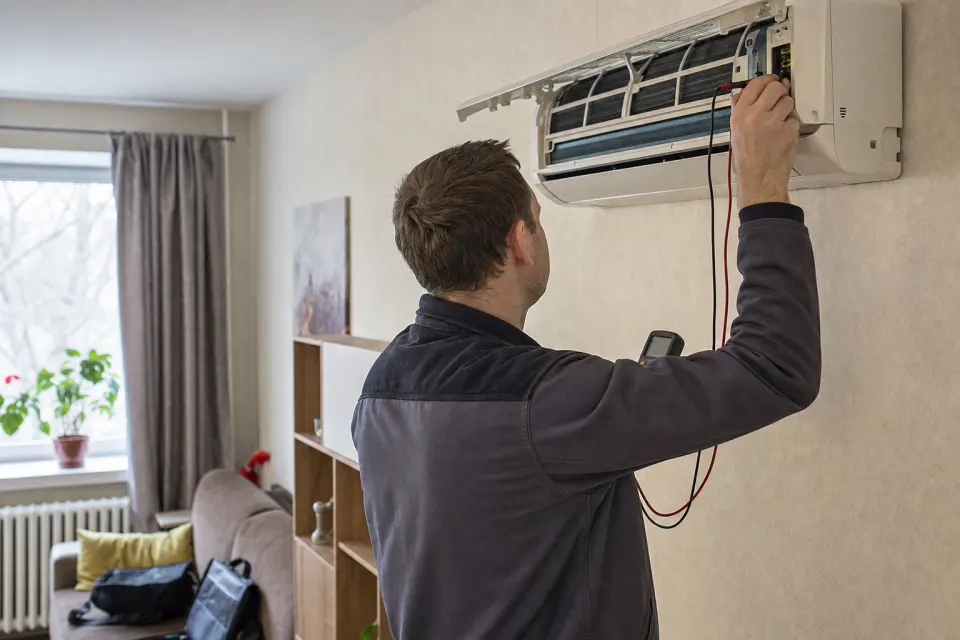
A common air-conditioner problem
If the equipment runs but the room does not cool, the reason may be its settings, blocked filters, restricted airflow, an outdoor-unit fault, sensors, electronics or the refrigerant circuit. We diagnose the system to identify the actual cause.
A considered solution
Confirm that cooling mode is selected, the set temperature is below the room temperature and accessible filters are not visibly blocked. If the problem remains, do not dismantle the equipment.
What we assess
Important before work
The exact scope depends on the property, equipment and installation conditions.
Dirty filters restrict airflow and can contribute to weak cooling.
If the outdoor unit does not operate or airflow is obstructed, the system cannot reject heat effectively.
A sealed system does not routinely consume refrigerant. A low charge requires investigation of a leak or other fault.
Basic checks
Confirm that the controller is set to cooling rather than fan-only or dehumidification mode, and that the target temperature is below the room temperature. After changing mode, the compressor may have a short protective delay before starting.
Check that curtains or furniture do not block the air inlet and that user-accessible filters are not visibly clogged. Only perform tasks described in the manufacturer’s manual and do not dismantle the casing or technical components.
Possible causes
Restricted airflow, contaminated indoor or outdoor heat exchangers, fan problems, an inaccurate temperature sensor or an electronic fault can all weaken cooling. Obstructed airflow around the outdoor unit also prevents effective heat rejection.
The refrigerant circuit is another possible source, including a leak or incorrect charge. This cannot be established safely by feeling the supply air; appropriate diagnostics and measurements are required.
Room cooling load
On a very hot day, heat gains can exceed normal conditions. Open windows, direct sun, high occupancy, cooking and other equipment increase the load. An undersized system may then run continuously without reaching the requested temperature.
Diagnostics should distinguish insufficient capacity from a fault. We compare present operation with the model, room conditions and previous performance. If the system cooled well before but no longer does, that change is an important symptom.
Preparing the request
Record the manufacturer, model, displayed error, approximate room temperature and whether both indoor and outdoor units operate. Mention airflow strength and any odour, water, ice or unusual sound.
This helps prepare for the visit but is not a remote diagnosis. If there is a burning smell, water near electrical components or repeated protective tripping, switch the equipment off until it is inspected.
Information for the technician
Note when the problem began and whether it is constant or limited to the hottest part of the day. State the selected mode and whether an error, ice, water or noise is present. Photographs of model labels and the controller display are useful.
Do not open refrigerant connections or electrical assemblies. If there is a burning smell, water near electricity or repeated tripping, leave the unit off. A precise and safe description reduces guesswork, but the final cause is determined on site.
Observations for your request
Provide the approximate room temperature, selected mode and target setting, and say whether airflow feels normal. Explain whether the change was sudden or cooling deteriorated gradually. These observations help separate settings, airflow and technical problems.
Check only user-level items: cooling mode, closed windows and visibly blocked filters. Do not open the sealed circuit or attempt pressure measurements. Photograph visible ice, oily residue or an error code instead.
Include the model, room area and whether the unit previously cooled the space effectively. If it has always struggled on the hottest days, capacity and room heat load should be assessed alongside the possibility of a fault.
Work process
Before starting, we confirm the solution, cost and suitable timing.
Tell us whether air is flowing, the outdoor unit operates and an error code is visible.
We inspect system operation, airflow and relevant technical components.
We explain the finding and agree the required work before proceeding.
Frequently asked questions
If your circumstances differ, describe them in the request and we will clarify the information needed.
Not necessarily. Refrigerant is not regularly used up in a sealed system. If the charge is low, the cause may be a leak, an incorrect previous charge or another defect.
Switch it off if there is unusual noise, a burning smell, water leakage, ice or an error code, and arrange diagnostics.
Preparing your request
Before diagnostics, retain the error code, complete model number and a short timeline: when the symptom began, which mode reveals it and whether the equipment has been repaired before. Do not open the casing, refrigerant circuit or electrical connections. Safe observations help us prepare, but the cause and repair scope can only be confirmed after a technical assessment.
Next step
Choose a service and provide the essential information. We contact you before work to confirm the details and proposal.